Keeping Your Sphynx Cat Healthy and Happy
CARE AND GROOMING
Specialised Care for Sphynx Cats
Despite their lack of fur, Sphynx cats require more grooming than many coated breeds. Their skin naturally produces oils that would normally be absorbed by fur, making regular cleaning essential.
Grooming Recommendations:
- Bathing with a gentle, cat-safe shampoo as needed, depending on the individual cat’s skin and oil production
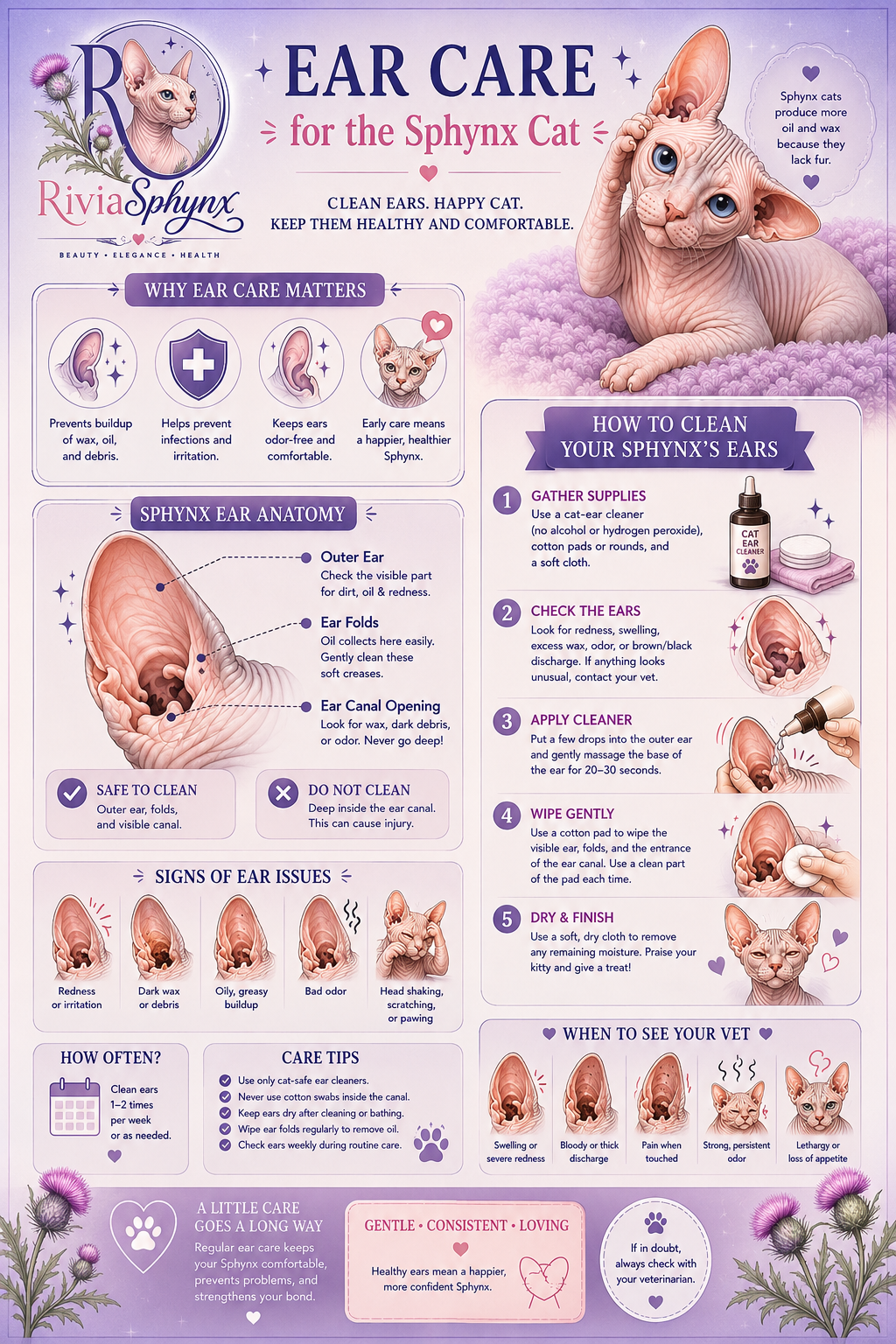
- Regular ear checks and cleaning with a cat-safe ear cleaner when required
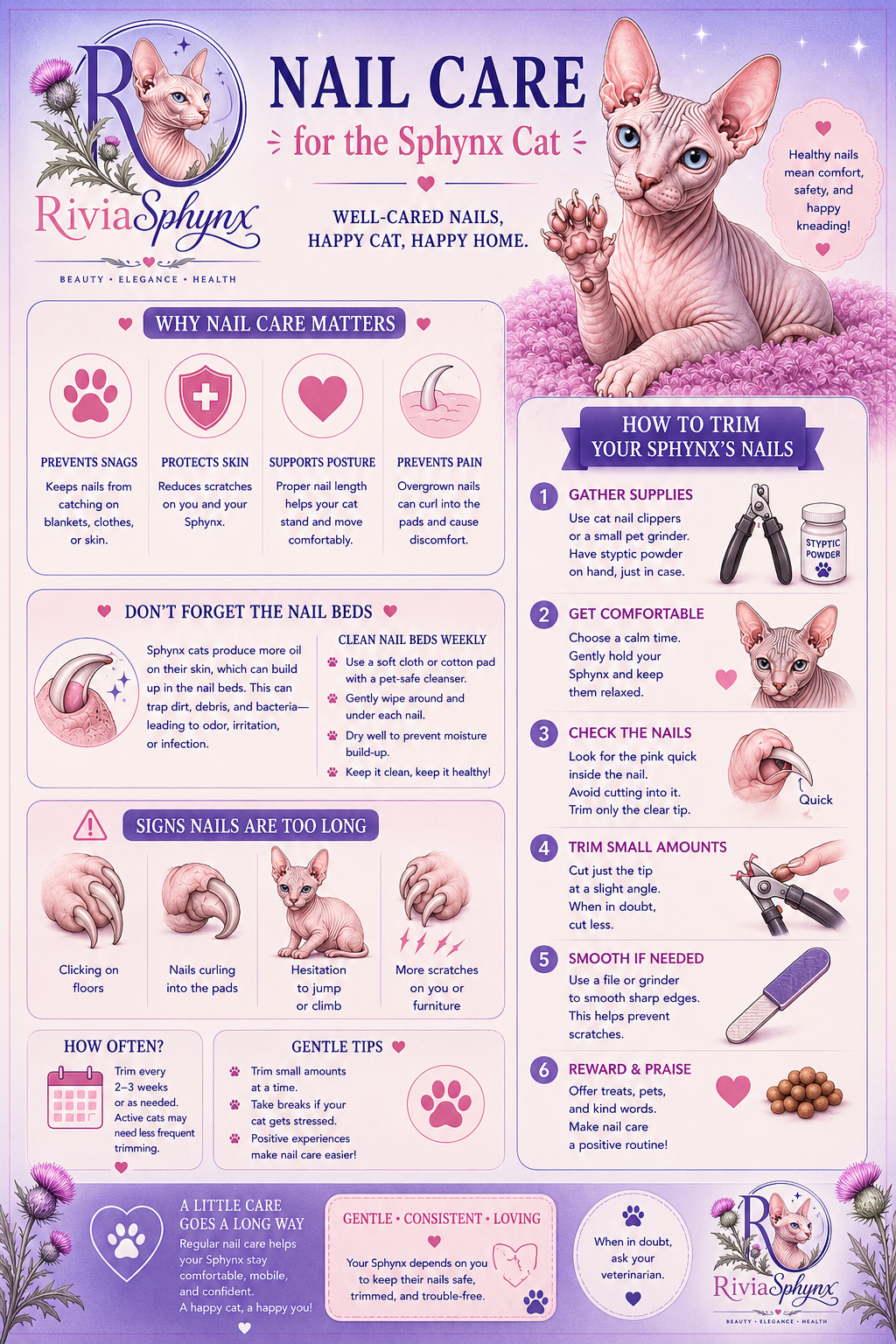
- Regular nail trimming and gentle cleaning around the nail beds
- Routine skin checks for signs of irritation, dryness or other changes
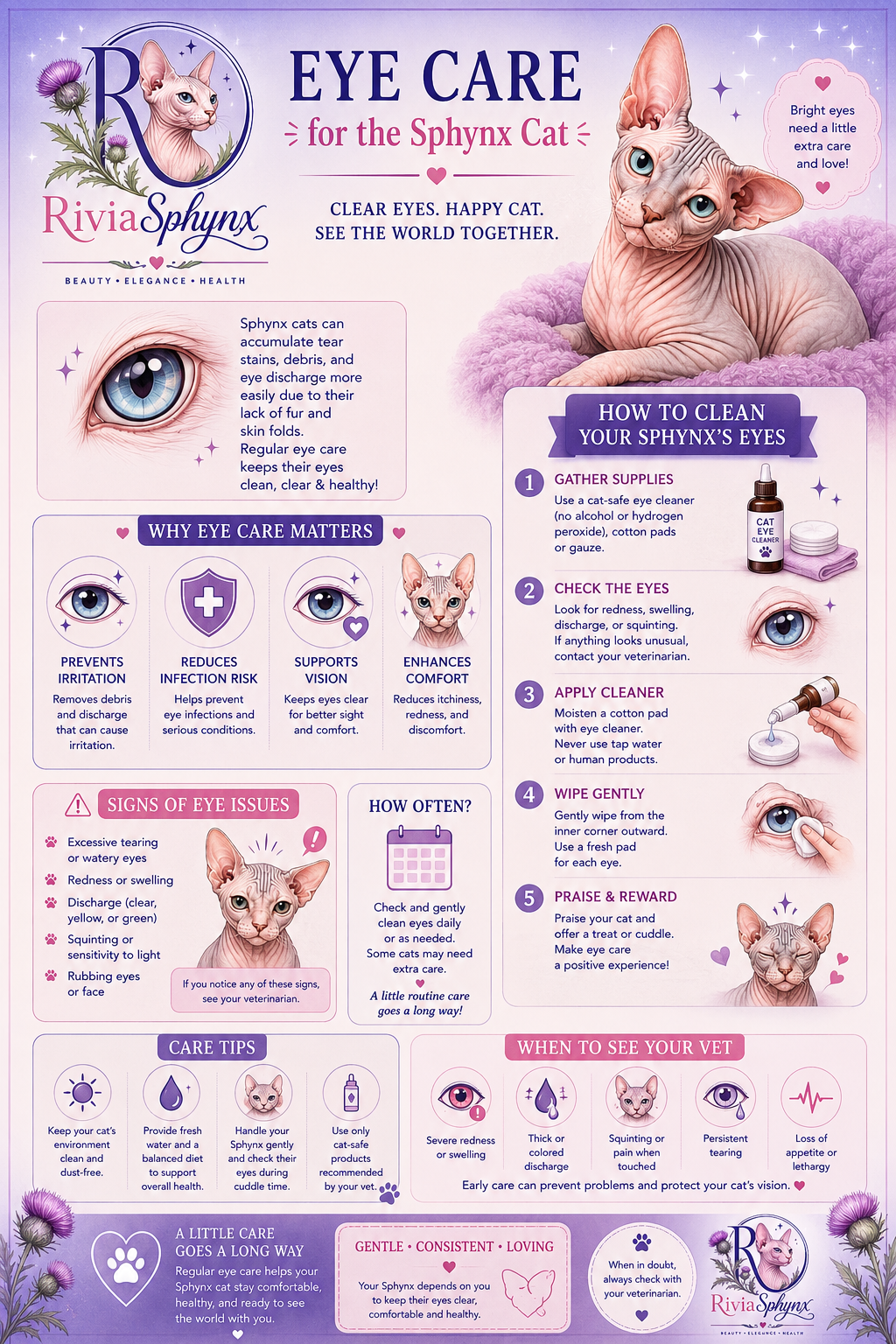
- Gentle eye cleaning as required to remove normal discharge
Sphynx cats are also highly temperature-sensitive and benefit from:
- Warm, comfortable sleeping areas and cosy blankets
- Soft, well-fitting clothing during colder weather if your cat is comfortable wearing it
- Protection from prolonged direct sunlight, excessive heat and cold temperatures
At RiviaSphynx, we introduce our kittens to gentle handling and routine grooming from an early age, helping them become comfortable with the care they will continue to receive in their new homes.
Below, you'll find our practical guides to ear, nail and eye care to help make regular Sphynx grooming as straightforward as possible.
Understanding Your Cat’s Vital Signs
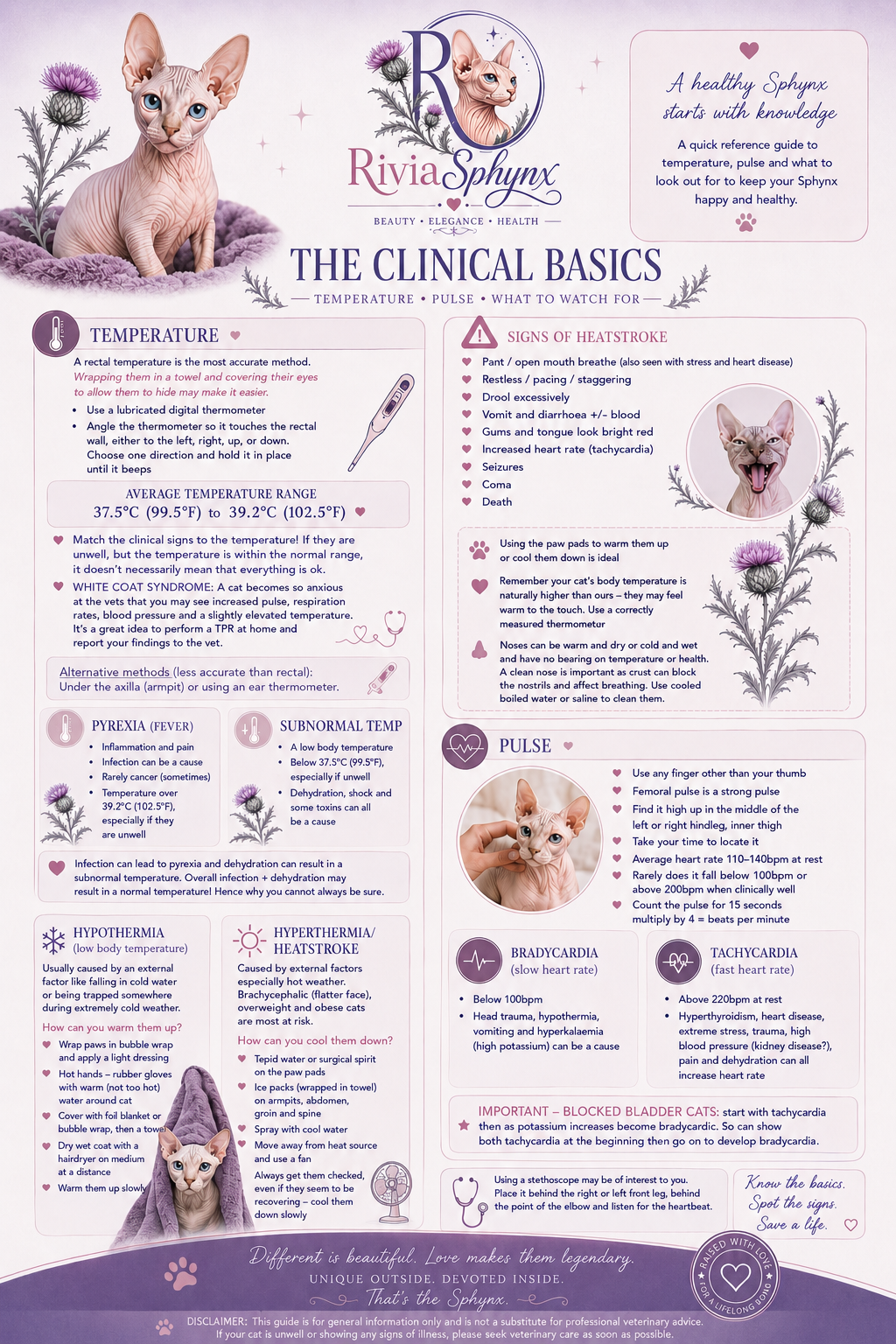
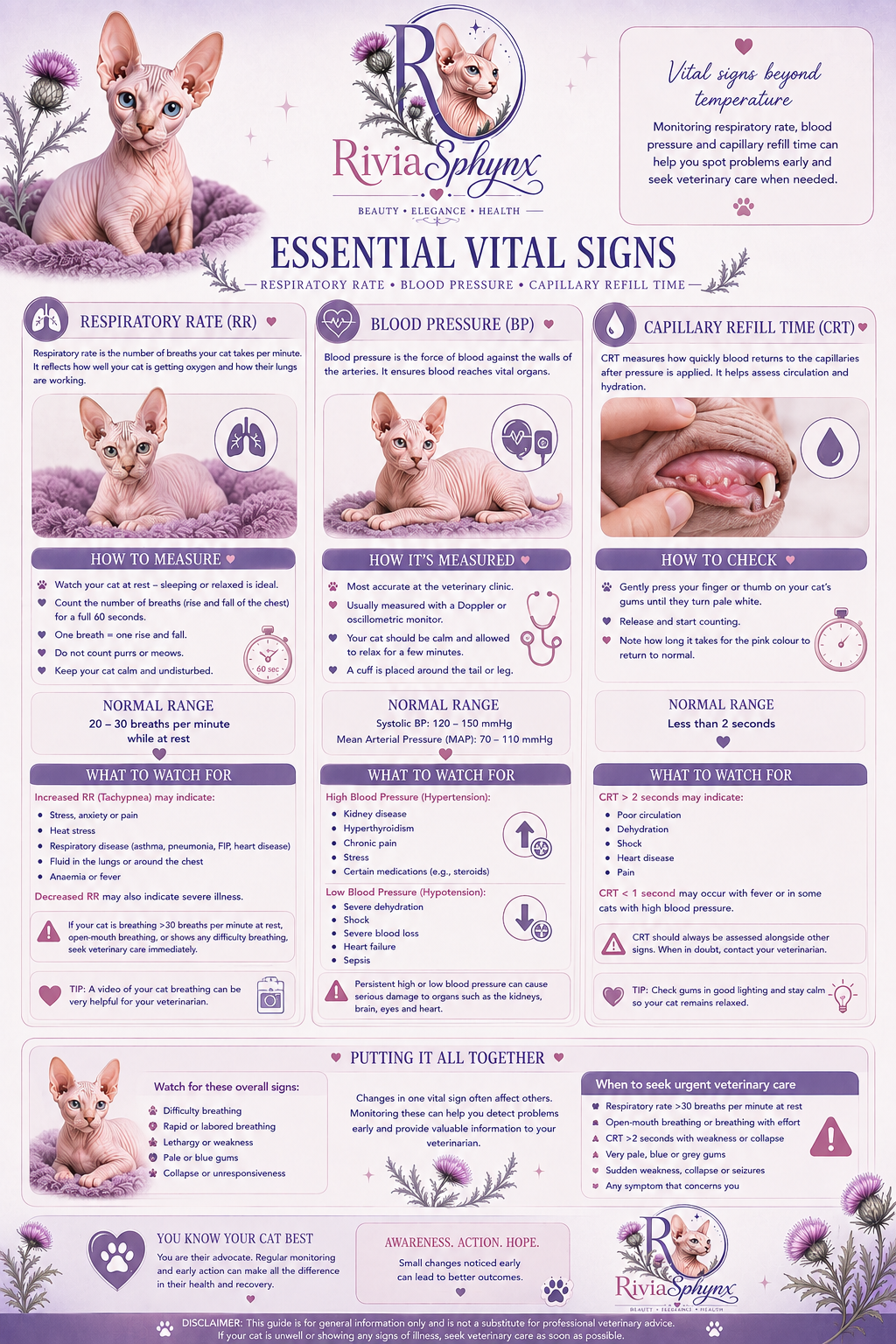
Understanding your cat’s basic vital signs can help you recognise changes in their health and provide your vet with useful information. Temperature, pulse, respiratory rate, blood pressure and capillary refill time can all provide valuable information about circulation, hydration, breathing and overall wellbeing.
Learning what is normal for your individual cat can make it easier to recognise when something has changed, particularly when this is accompanied by other signs such as lethargy, weakness, reduced appetite, pale or unusually coloured gums, difficulty breathing or changes in behaviour.
These checks are intended to complement — not replace — professional veterinary assessment. Any cat that appears unwell, is deteriorating, has difficulty breathing or has concerning changes in their vital signs should be assessed by a vet promptly.
Urinary Health
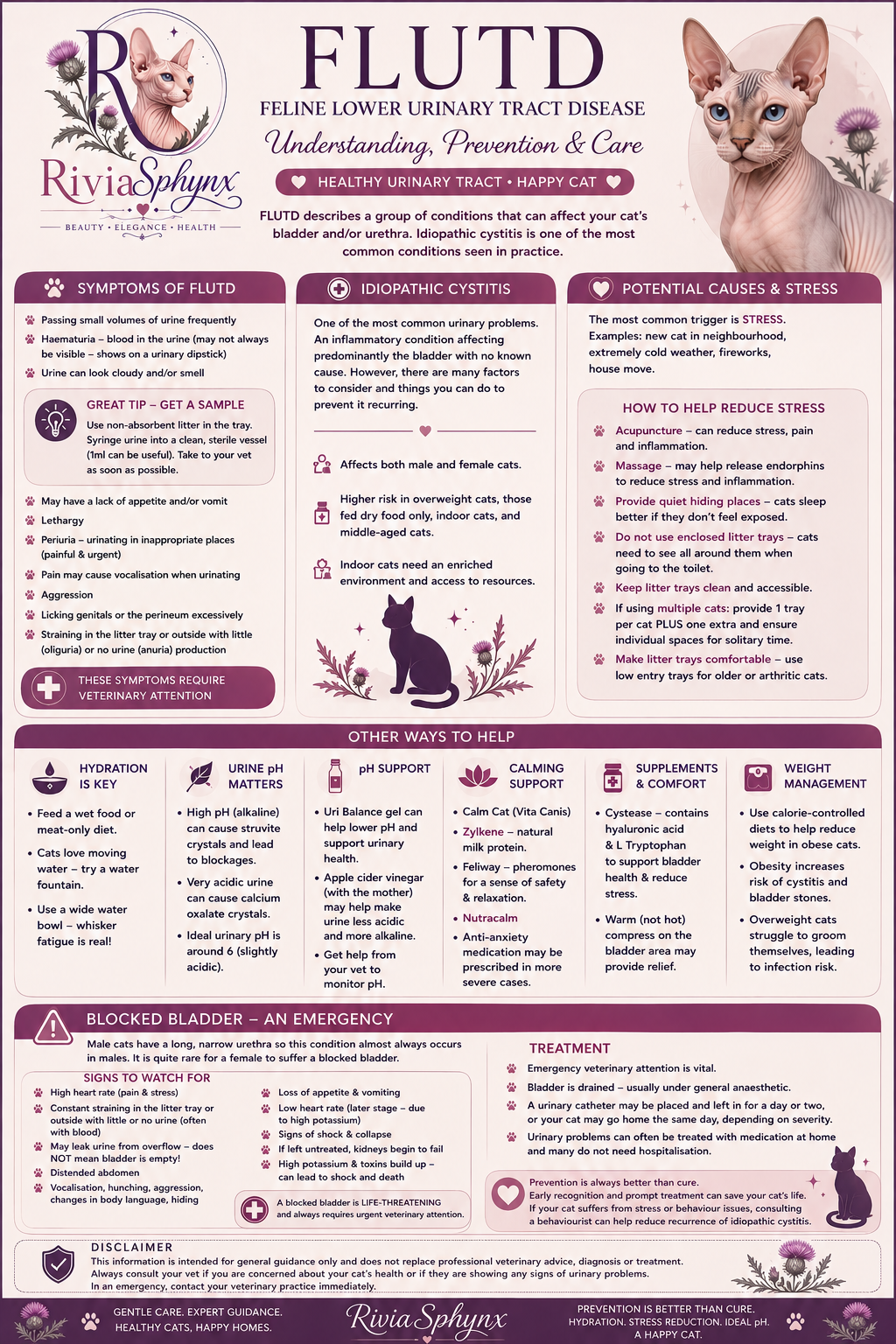
At RiviaSphynx, we believe good urinary health is an important part of keeping our cats happy and well. Feline Lower Urinary Tract Disease (FLUTD) is a term used to describe a range of conditions affecting the bladder and/or urethra, with feline idiopathic cystitis (FIC) being one of the more common causes of lower urinary tract signs.
Encouraging good hydration, providing clean and easily accessible litter trays, maintaining a healthy weight and reducing stress can all help support urinary health. Urinary problems can have a number of different causes, so changes in urination should always be discussed with your vet rather than treated at home based on urine pH alone.
Watch for signs such as frequent attempts to urinate, passing only small amounts of urine, blood in the urine, urinating outside the litter tray, excessive licking around the genital area, vocalising when attempting to urinate or straining.
If your cat is repeatedly straining to urinate but producing little or no urine, seek veterinary attention immediately. A urinary blockage is a potentially life-threatening emergency and requires urgent treatment.
Understanding FIP & Common Cat Viruses:
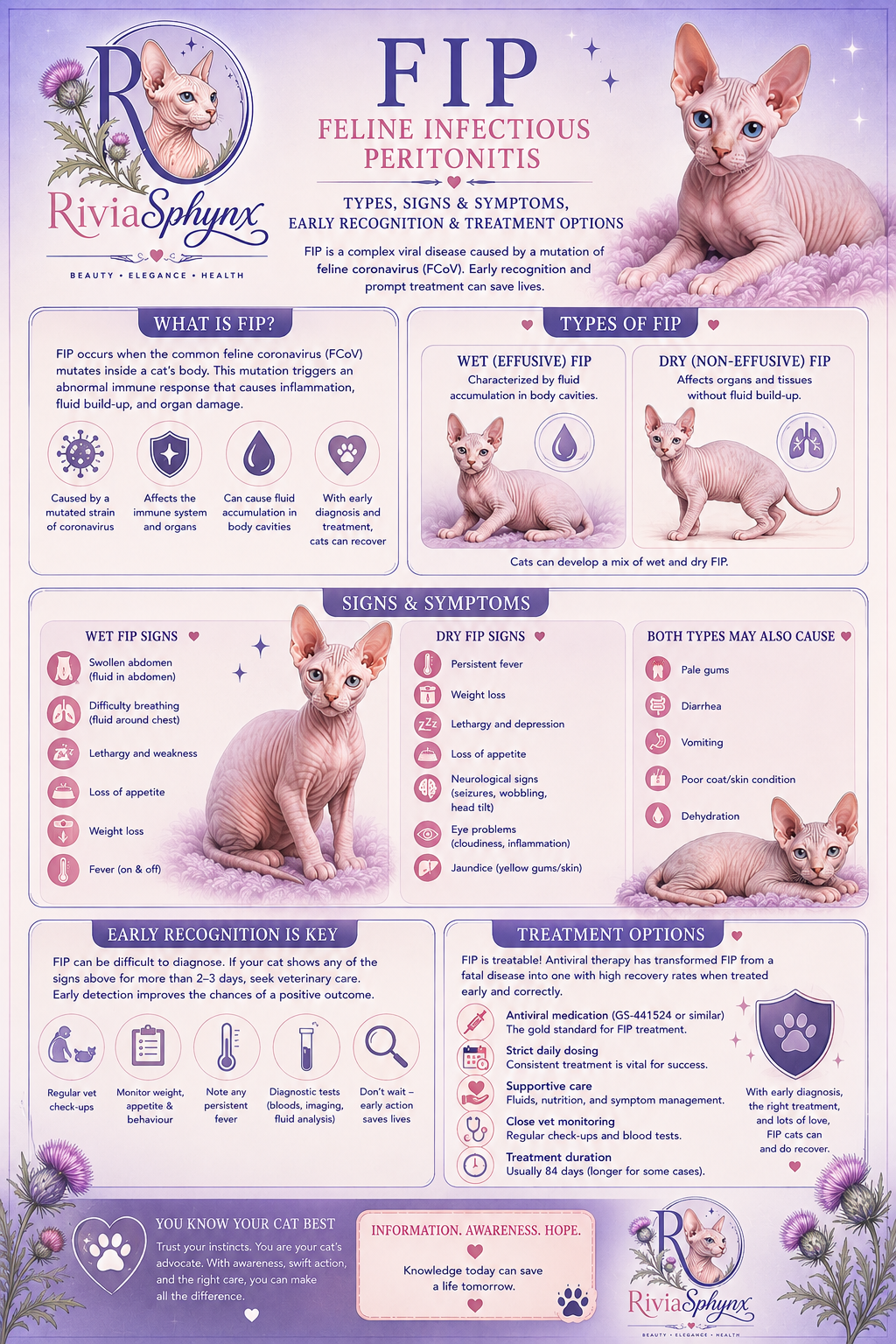
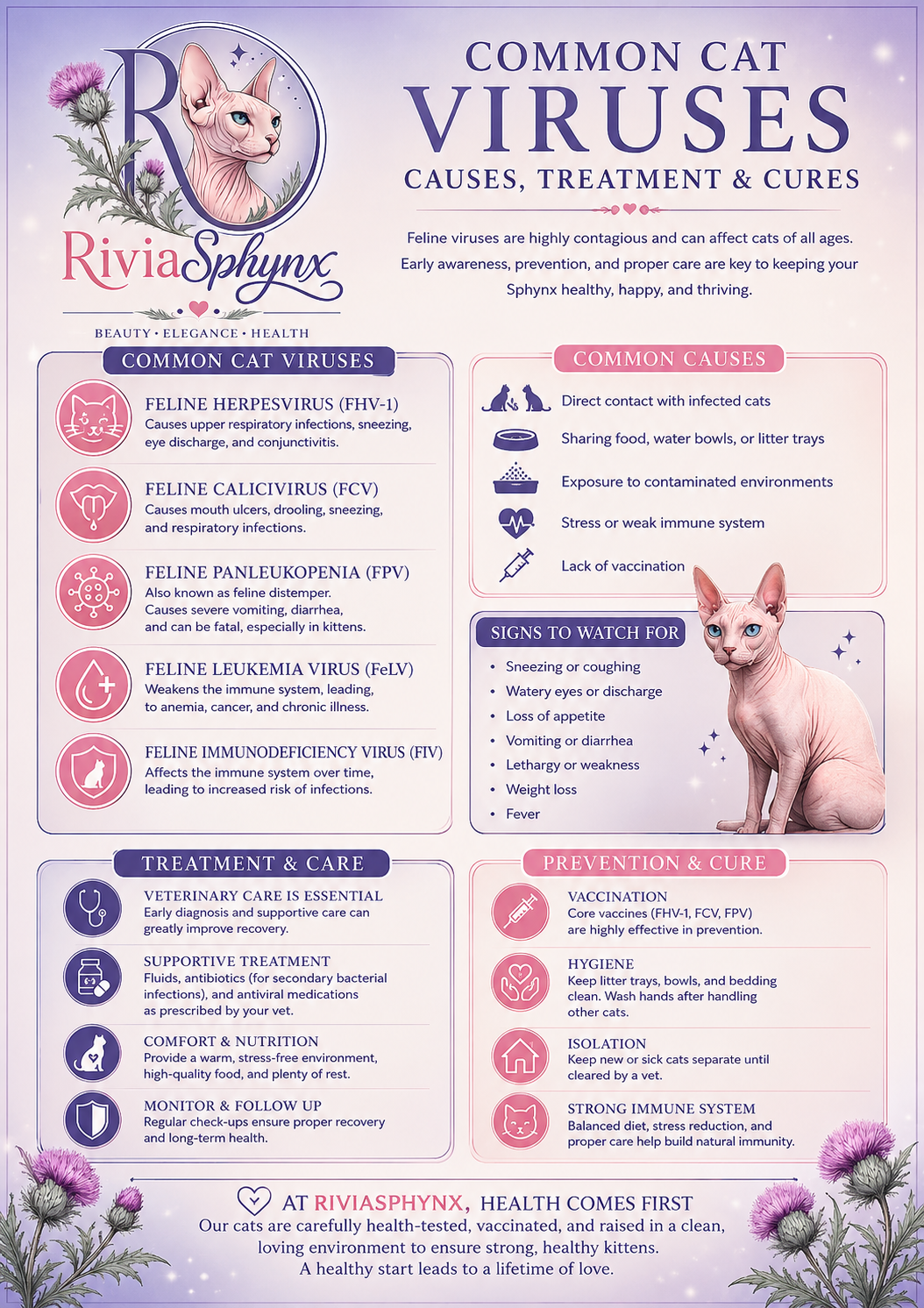
At RiviaSphynx, we believe that giving owners clear, reliable information can help them recognise changes in their cat’s health and know when to seek veterinary advice. We therefore provide two educational resources for our kitten families: our FIP Awareness & Early Recognition Guide and our Common Cat Viruses Health Guide.
Together, these guides provide accessible information about signs and symptoms to be aware of, when to seek veterinary advice, and practical measures that can help support your cat’s health and wellbeing.
We have also included links below to further information and support relating to Feline Infectious Peritonitis (FIP), including current treatment information.
HAPPY, HEALTHY COMPANIONS
Building a Lifelong Bond
A Sphynx cat’s wellbeing is about more than physical health. These highly social cats also benefit from companionship, mental stimulation, play and feeling included as part of the family. With the right environment and consistent care, they can develop into confident, affectionate and engaging companions.
Daily Habits for a Thriving Sphynx
- Maintain a consistent daily routine
- Provide interactive play and enrichment
- Keep bedding, feeding and litter areas clean
- Offer regular affection and social interaction
- Be aware of changes in behaviour, appetite or normal routines
WELFARE AND SUPPORT
Supporting Emotional & Behavioural Wellbeing:
Sphynx cats are generally very social and often enjoy being closely involved in family life. Providing companionship, enrichment and opportunities to explore and play can help support their emotional wellbeing.
Creating a Happy Environment
- Regular companionship and interaction
- Toys, puzzles and other forms of mental stimulation
- Safe places to climb, explore, rest and retreat
- Regular play and enrichment
- Positive, reward-based training
- Warm, comfortable resting areas
Socialising your RiviaSphynx Kitten
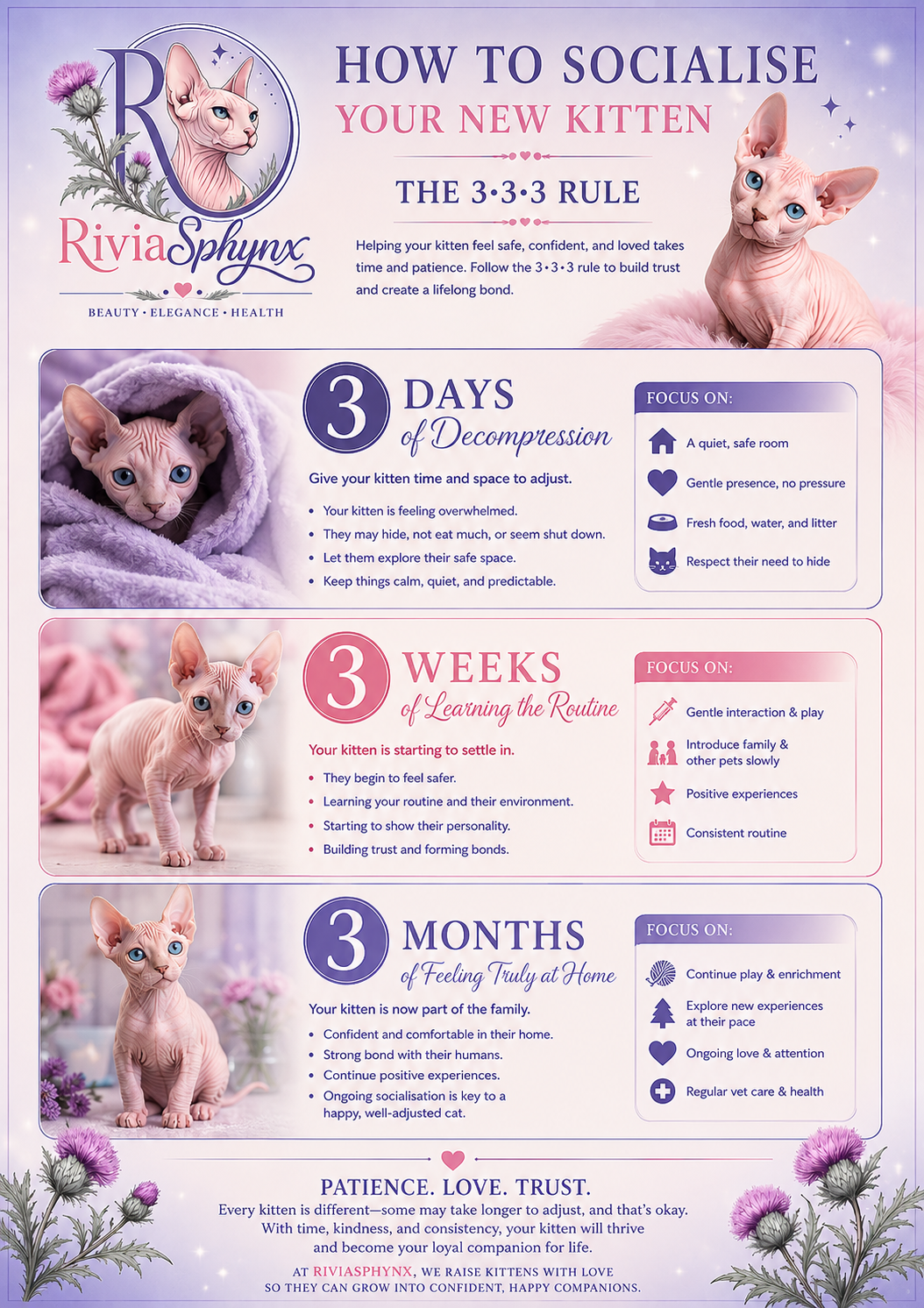
The 3-3-3 approach is a useful guide to help new owners understand how a kitten may settle into a new home. The first few days are about allowing time to adjust to unfamiliar surroundings; over the following weeks, routines, trust and relationships begin to develop; and over the following months, confidence and a sense of security can continue to grow.
Every kitten is an individual, so these timescales should be treated as a guide rather than a rule. Some kittens settle very quickly, while others need more time. A calm introduction, consistent routine, positive experiences and allowing your kitten to progress at their own pace can all help them feel safe and secure in their new home.
Raw Feeding Your RiviaSphynx Kitten
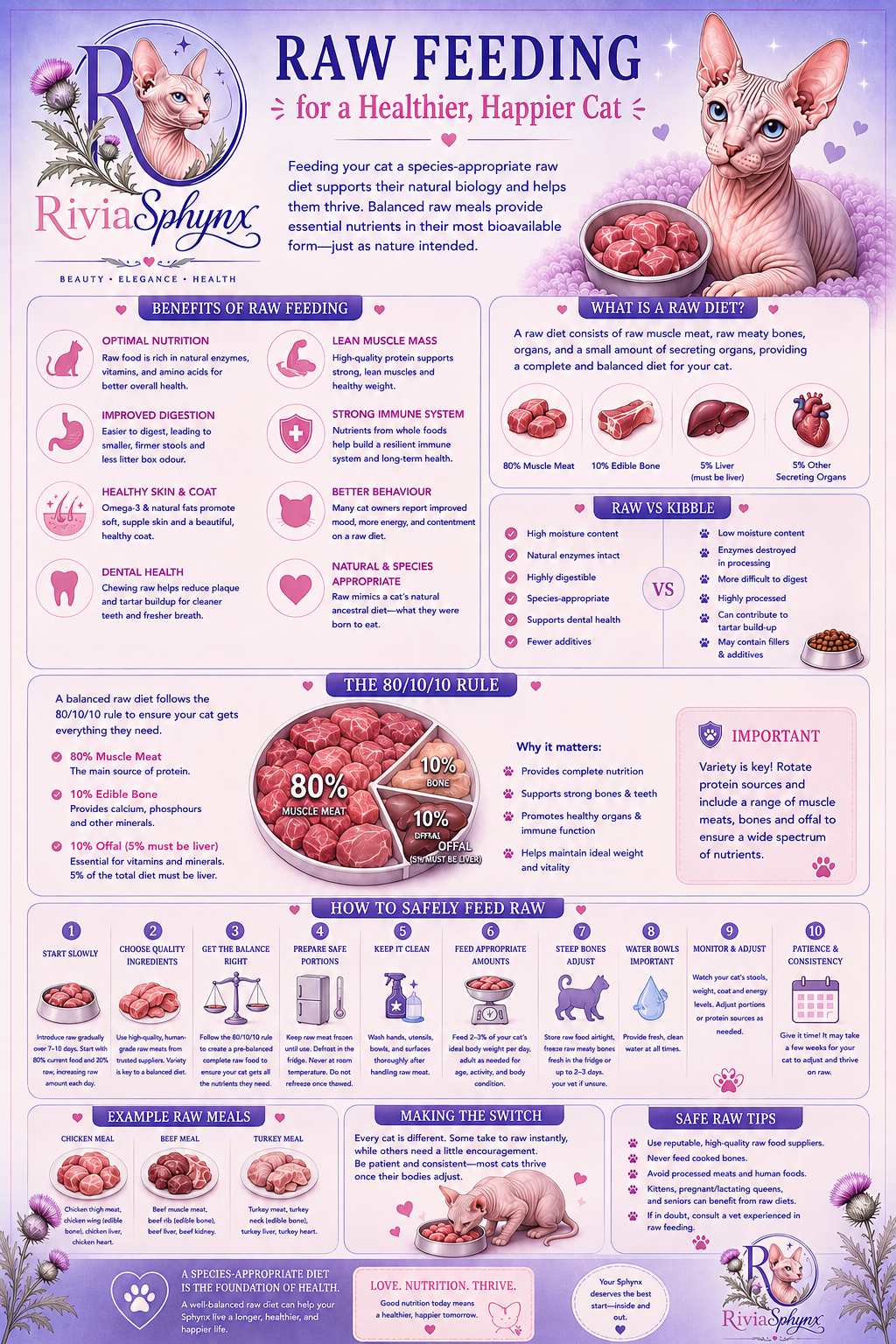
RiviaSphynx kittens are raised and weaned onto a raw diet and will be accustomed to eating raw food when they leave for their new homes. New owners will be given information about the food their kitten has been eating so that their normal diet can be continued during the important settling-in period.
If you choose to continue raw feeding, it is important to ensure that your kitten receives a complete and balanced diet appropriate for growth. Simple ratios such as 80/10/10 (80% muscle meat, 10% bone and 10% organ) should not automatically be assumed to provide all of the nutrients a growing kitten requires. When choosing commercially prepared raw food, look for products labelled as “complete” rather than “complementary” and appropriate for your kitten's life stage.
Good food hygiene is particularly important when handling and storing raw food. Raw meat can carry harmful bacteria, so hands, bowls, utensils and preparation surfaces should be cleaned thoroughly and raw food stored and handled safely.
If at any stage you wish to change your kitten's diet, we recommend doing so gradually and seeking appropriate nutritional or veterinary advice if you are unsure about their individual requirements.
See the raw-feeding starter guide and link button below for further information.
HCM Scanning
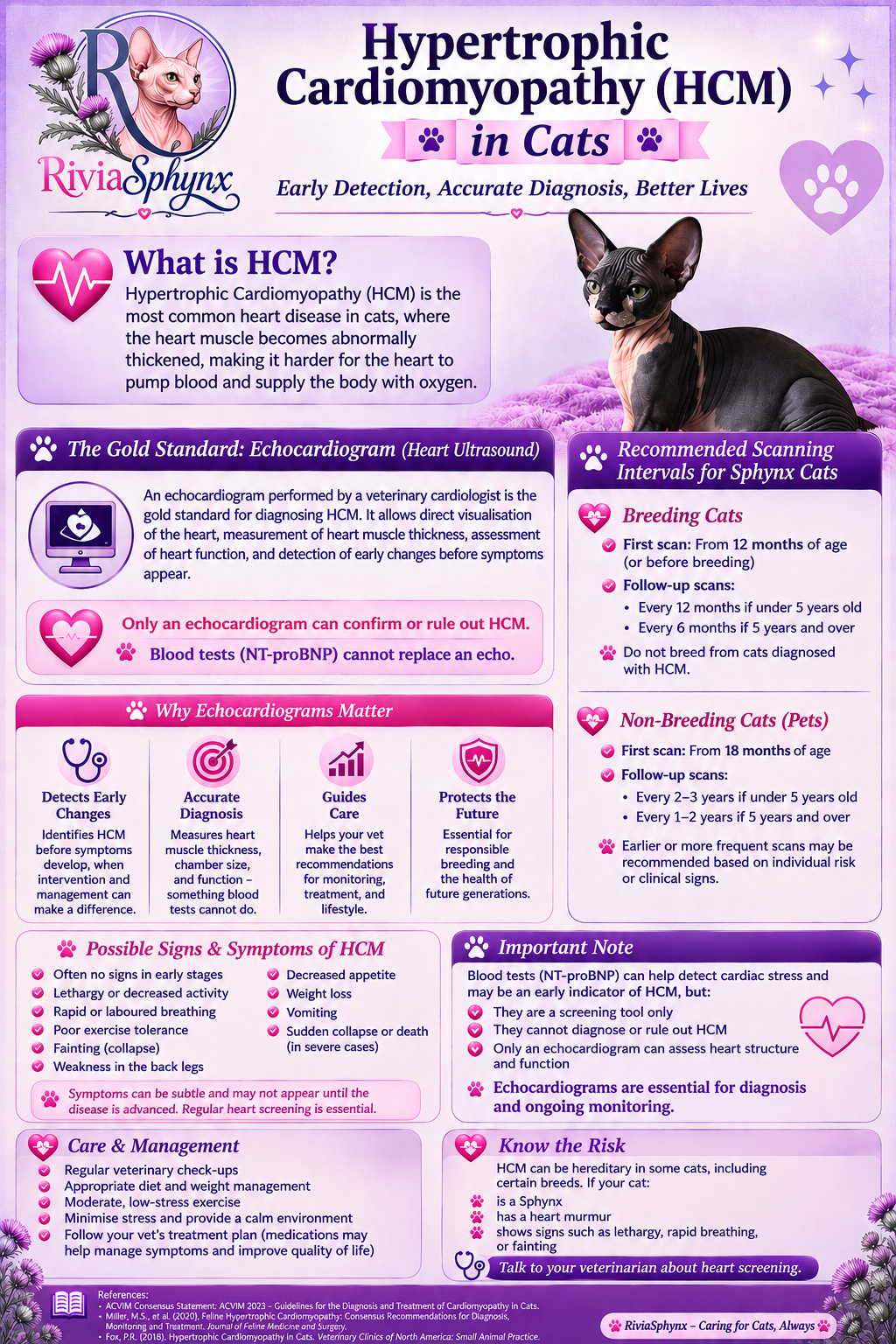
Hypertrophic Cardiomyopathy (HCM) is an important health consideration in the Sphynx breed and can develop even in cats that have previously had a clear heart scan. For this reason, RiviaSphynx carries out regular cardiac screening of our breeding cats to monitor their heart health and support responsible, welfare-focused breeding decisions.
Our cats undergo annual echocardiographic HCM screening, and we continue to screen them after they retire from our breeding programme. Each scan provides information about the cat’s heart at that point in time, which is why ongoing screening is an important part of our approach.
Our HCM scans are carried out at the Small Animal Hospital in Glasgow or by Vicki Ironside at her Sheffield Clinic. Once verified, results are published on the PawPeds database, and a link is provided below.
We believe ongoing HCM screening, transparency about results and responsible breeding decisions are important parts of protecting the health and welfare of our cats and the kittens we breed.
Understanding the Kitten APGAR Score – Giving Every Sphynx Kitten the Best Start
As a new Sphynx breeder, I am passionate about learning as much as I can about neonatal kitten care and understanding how to give newborn kittens the best possible start in life. I recently attended a Newborn Kitten Care webinar presented by Dr Emmanuel Fontaine and sponsored by Purina Pro Plan, where one of the valuable topics discussed was the importance of using the APGAR scoring system to assess newborn kittens.
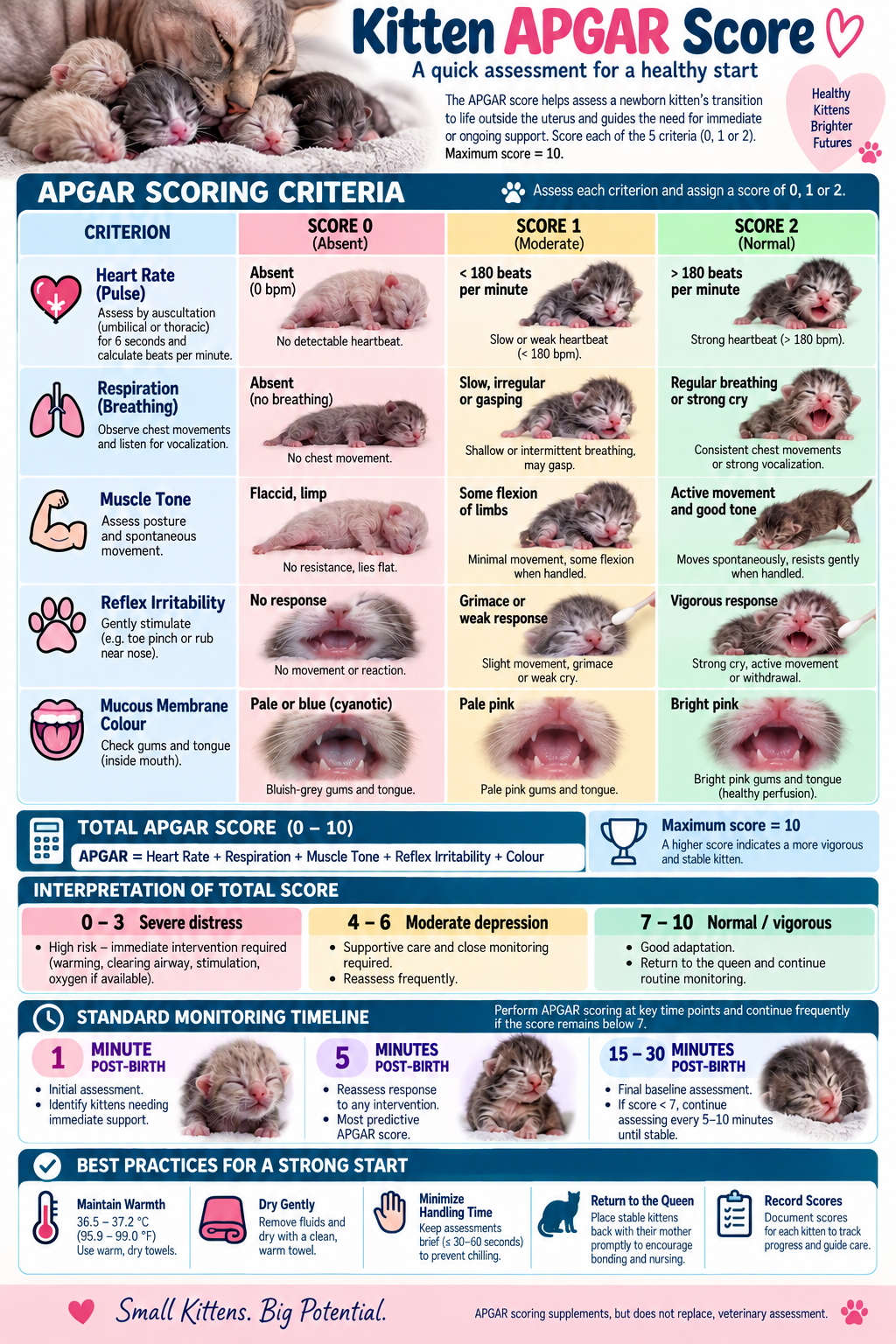
The APGAR score is a simple but valuable assessment tool that helps breeders evaluate a kitten's condition after birth and recognise when additional support may be needed. It looks at five key signs: heart rate, breathing, muscle tone, reflex response and mucous membrane (gum) colour. Each is scored from 0 to 2, giving a total possible score of 10. A score of 7–10 is generally reassuring, 4–6 identifies kittens who may be at risk and need closer monitoring, while 0–3 indicates a severely compromised kitten requiring urgent attention.
One of the key things I learnt from Dr Fontaine's webinar was that a kitten may initially appear healthy but still be struggling, making regular assessment particularly important. He recommended recording APGAR scores at 5, 30 and 60 minutes after birth, looking for improvement over time and recognising that a declining score can be an early warning sign.
I've created the illustrated APGAR chart below as a learning resource and a practical reference for myself and others interested in newborn kitten care. As I continue my journey into Sphynx breeding, I believe that building my knowledge, understanding the latest veterinary guidance and being prepared before kittens arrive are all important parts of responsible breeding.
The APGAR score is a monitoring tool rather than a diagnosis, and any kitten showing signs of distress should receive prompt, appropriate care and veterinary support.
Learning resource inspired by Dr Emmanuel Fontaine's Newborn Kitten Care: The 2026 Update webinar, sponsored by Purina Pro Plan.
I have also included a link here to downloadable kitten growth charts.
RiviaSphynx Commitment
At RiviaSphynx, we believe education, responsible ownership, and ethical breeding practices are the foundation of happy, healthy Sphynx companions. Our goal is to provide reliable information and compassionate support for both new and experienced Sphynx owners.
RIVIASPHYNX DISCLAIMER
These guides are provided for general educational purposes only and are not a substitute for professional veterinary advice, diagnosis, or treatment. While every effort has been made to ensure the information is accurate and up to date, every cat is an individual and may have different health and care needs, and owners should always consult a qualified veterinary surgeon regarding any health concerns. These guides are intended to support awareness, not replace expert care.

SPHYNX CAT ASSOCIATION
Together, Supporting Sphynx Welfare
Every RiviaSphynx kitten goes home with their first year’s membership of the Sphynx Cat Association included.
We believe responsible breeding goes hand in hand with supporting the wider Sphynx community. The Association supports Sphynx welfare through rescue, education and assistance for cats in need, and we are proud to support their work.
We hope that, after your complimentary first year, you will choose to continue your membership and help support the valuable work of the Association.
Together, we can help make a difference to Sphynx cats in need while promoting responsible ownership and the long-term welfare of the breed.
Discover more about the Sphynx Cat Association and its rescue, welfare and educational work below.